Build a Creative Space That Actually Inspires You (Hint: Put Down Your Phone)
I have a confession. I spent about three years building what I thought was an incredible inspiration library — thousands of saved posts across Pinterest, Instagram, and various bookmarking apps. It was meticulously organized. It was, objectively, a lot of work.
And it made me feel absolutely nothing.
Every time I sat down to actually make something, I'd open those folders and just... scroll. And scroll. And then close the app and stare at a blank canvas feeling vaguely overstimulated and completely uninspired. Sound familiar?
There's a reason for that. And the fix is more tactile, more personal, and way more fun than building another digital folder.
Why Scrolling Kills the Creative Mood
Digital inspiration platforms are designed, first and foremost, to keep you on them. The algorithm's job isn't to help you make something — it's to show you more things to look at. Which means every time you open Pinterest looking for a color palette, you're also getting furniture trends, recipes, travel photography, and about forty things that have nothing to do with what you sat down to create.
Your brain is trying to do two things at once: seek inspiration and manage a firehose of unrelated visual information. That's exhausting. And exhausted brains don't make good art.
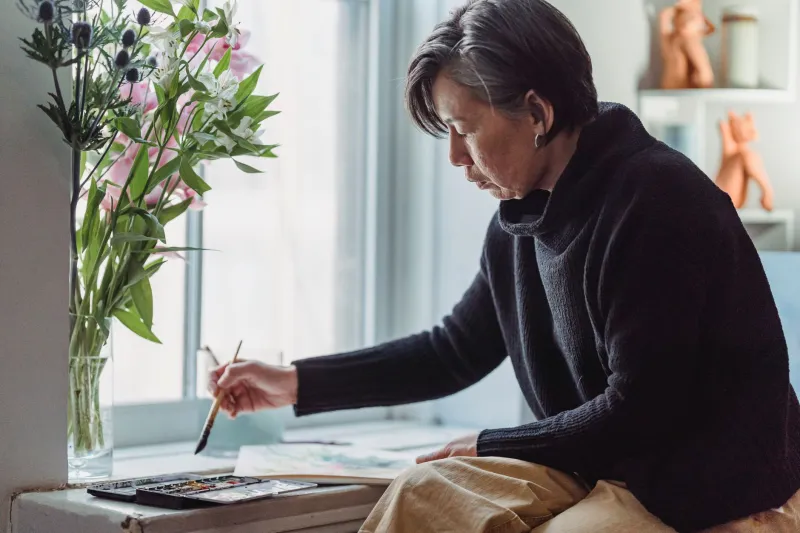
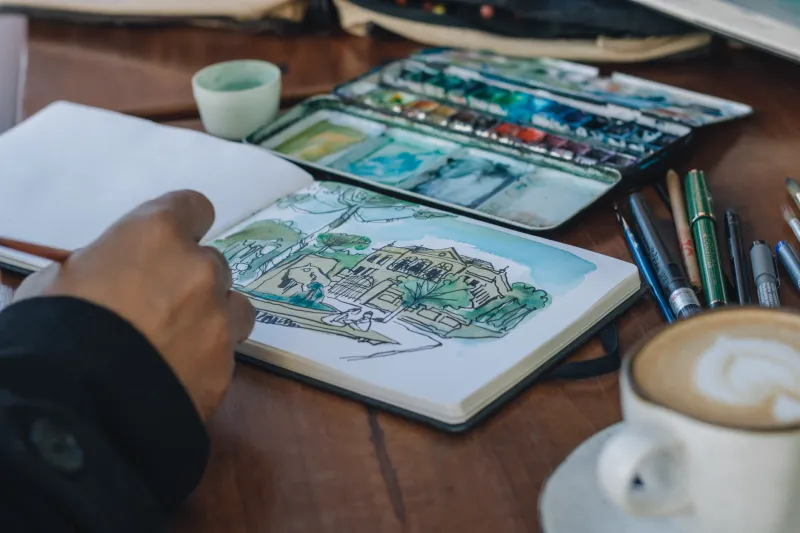
Tactile, physical inspiration works differently. When you pick up an art book and flip through it slowly, or run your fingers across a fabric swatch, or hold a piece of vintage pottery you found at a flea market — your nervous system actually slows down. You're present. And presence is where creativity lives.
Start With What You Actually Love
The first step to building a real creative space isn't buying anything. It's editing.
Look around wherever you currently work or create. What's actually in that space? Is it stuff that genuinely sparks something in you, or is it stuff that just accumulated? Be honest. A creative space cluttered with things you feel neutral about isn't a studio — it's just a room.
Start pulling out only the objects, books, and materials that make you feel something when you look at them. Not things you should love because they're expensive or impressive. Things that actually do something to your creative brain when they're in your peripheral vision.
That's your foundation.
Build a Physical Inspiration Collection That Means Something
Here's where the real fun starts. Think of your physical space as a curated collection — not a hoard, not a storage unit, but a deliberate gathering of things that represent your actual aesthetic and creative interests.
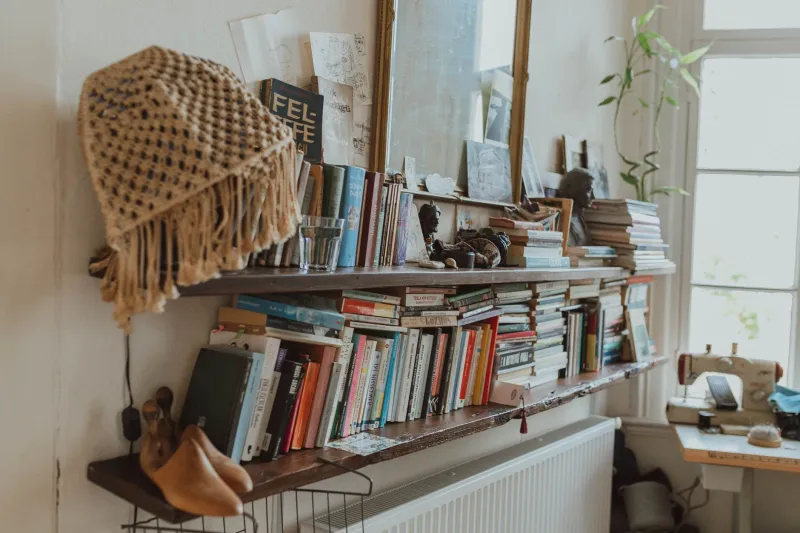
Art books and monographs are one of the best investments you can make for a creative space. Not coffee table books you bought because they looked nice — actual monographs on artists whose work genuinely moves you. Thrift stores, estate sales, and used bookshops are incredible sources. I've found first-edition art books at Goodwill for three dollars. The tactile experience of flipping through a beautifully printed book of paintings or photography is something a screen literally cannot replicate.
Vintage finds and physical artifacts are another layer. Flea markets, antique malls, and estate sales are full of objects that carry visual and emotional weight — old postcards, interesting typography from vintage packaging, fabric samples, ceramic pieces with unusual glazes. These things become reference points. They suggest color, texture, form, and mood in ways that feel alive.
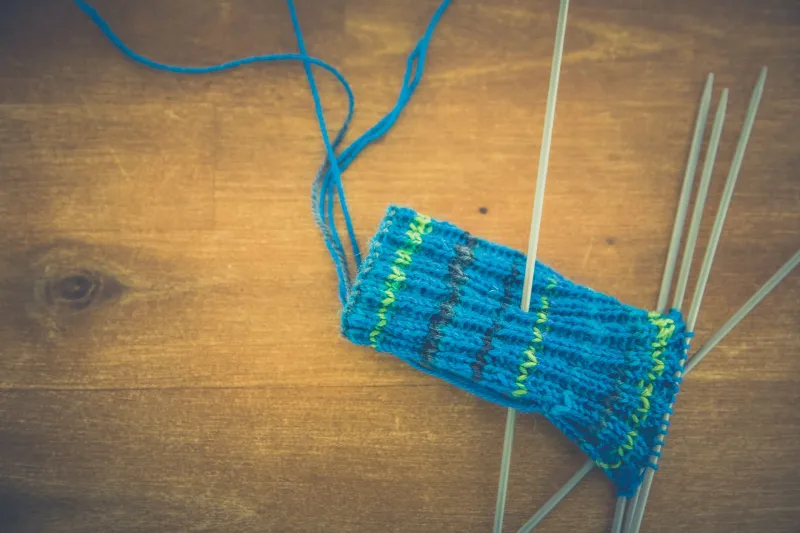
Material samples — swatches of fabric, paper samples, paint chips, pieces of interesting texture — belong in a physical drawer or tray you can touch. When you're stuck on a project, running your hands over different textures activates different parts of your brain than staring at a screen. It sounds a little woo-woo until you try it.
Make the Space Work for How You Actually Create
The layout of your workspace matters more than how it looks on Instagram. (I know. Ironic, given the topic.)
Think about your actual creative process. Do you need a big flat surface to spread things out? Do you work better with everything visible and within reach, or do you prefer a clean surface with storage nearby? Do you need natural light, or do you actually focus better in a cozier, lower-light environment?
Design for your real habits, not your aspirational ones. If you always end up on the floor surrounded by materials, maybe your floor space is actually your studio. If you need a wall to pin things up and step back from, invest in a big corkboard or a magnetic surface. Let your actual working style lead.
The Analog Mood Board vs. The Pinterest Board
I still believe in mood boards — I just believe in the physical kind.
A real analog mood board is a living document. You pin things up, take them down, add new pieces, rearrange. It changes as your project evolves. And because every single thing on it was physically chosen — cut from a magazine, printed and trimmed, pulled from a fabric sample book — it represents actual decisions, not just passive saves.
Compare that to a Pinterest board with 400 images. How many of those did you actually choose versus just tap because the algorithm showed them to you? The physical version forces curation. And curation is creative thinking.
A Few Practical Things Worth Having
If you're starting from scratch or refreshing a space, here are some things that consistently make a difference:
- A small shelf dedicated only to books and objects that inspire you (not storage, not practical items — just the good stuff)
- A dedicated surface for works-in-progress that you don't have to clear off every time you stop
- Good lighting that you can actually adjust — a combination of natural light and a warm lamp does wonders for mood
- A small tray or bowl for materials you're currently working with, so they're always visible and accessible
- Something that smells good — a candle, a plant, whatever works for you — because scent is a surprisingly powerful creative trigger
The Point Isn't to Go Completely Offline
I'm not saying delete your Pinterest. I'm saying don't let it be the first place you go when you sit down to create. Let your physical space do that work. Let the books on your shelf, the objects on your windowsill, and the materials in your tray be the first conversation.
Then, if you need to search for something specific, go online with intention — not as a warm-up or a habit.
The difference between a space that inspires you and a space that just exists is almost always about the quality of what's in it and how intentionally it was chosen. Your creative brain deserves better than an infinite scroll.
Give it something it can actually hold.