Embrace the Quiet: How Slow Hobbies Secretly Supercharge Your Creative Brain
I'll be honest with you: I spent a really long time thinking that if I wasn't producing something, I was wasting time. Scroll through a feed, listen to a podcast while washing dishes, optimize the commute with an audiobook. Every gap filled. Every idle moment monetized in some small, self-improving way.
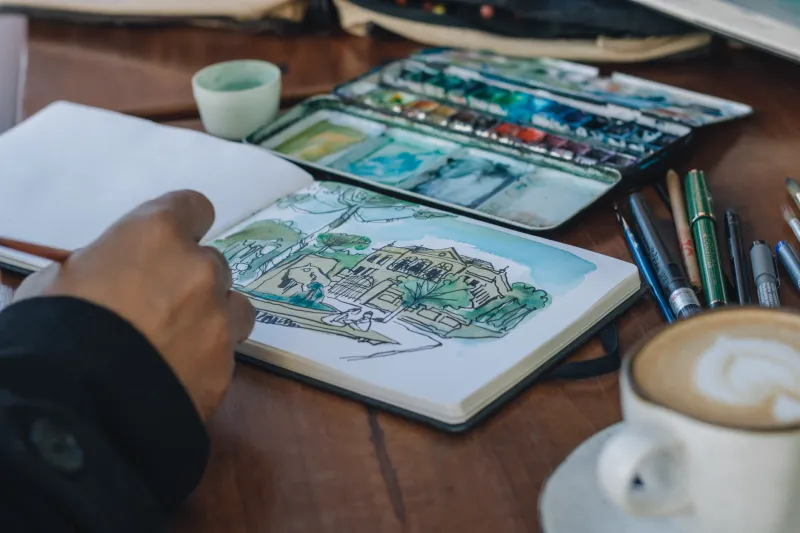
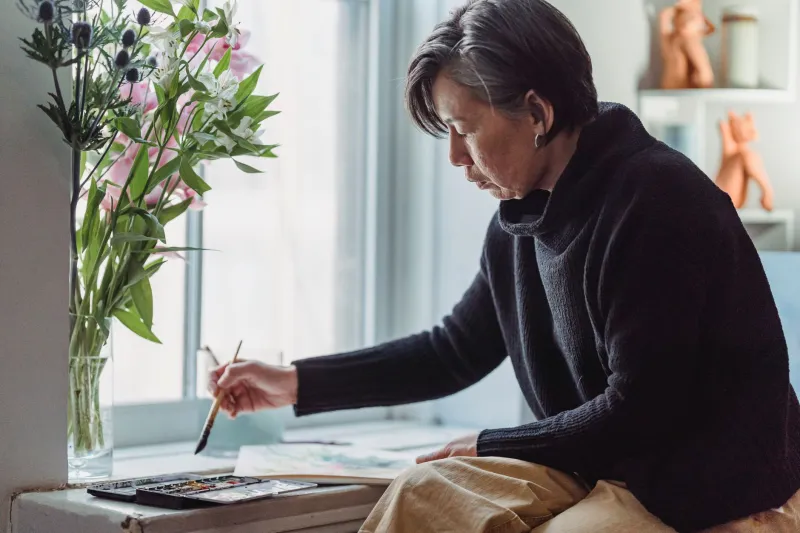
Then one rainy Saturday afternoon, with nothing particular on my to-do list, I sat down with a cheap watercolor set I'd bought on a whim six months earlier and just... painted. Badly. Slowly. For two hours. And when I finally looked up, something had shifted — not just in my mood, but in the way I was thinking. Ideas were floating up to the surface that I hadn't been able to grab for weeks.
Turns out, that's not a coincidence. That's science. And also, honestly, just good sense.
The Loud World Wants All of You
We're living in an era of relentless stimulation. Notifications, trending sounds, breaking news, infinite content queues — the modern attention economy is specifically engineered to keep you hooked, scrolling, reacting. And look, I'm not here to shame anyone for loving their shows or their TikTok rabbit holes (guilty on both counts). But there's a real cost to never letting your brain go quiet.
Researchers call it cognitive overload, and it's basically what happens when your brain is so saturated with incoming information that it can't do the deeper processing work that leads to genuine insight. Your prefrontal cortex — the part responsible for creative problem-solving and original thinking — needs downtime to actually do its best stuff. When you're constantly consuming, you're essentially leaving no room for your mind to wander, connect dots, or surprise you.
Boredom, it turns out, is not a bug. It's a feature.
What Boredom Actually Does to Your Brain
Psychologists have been studying the creative benefits of boredom for years, and the findings are kind of wild. When your brain isn't actively engaged with an external task, it shifts into what's called the default mode network — a state of loose, associative thinking that's basically the birthplace of daydreams, creative leaps, and those shower-thought revelations that feel like lightning.
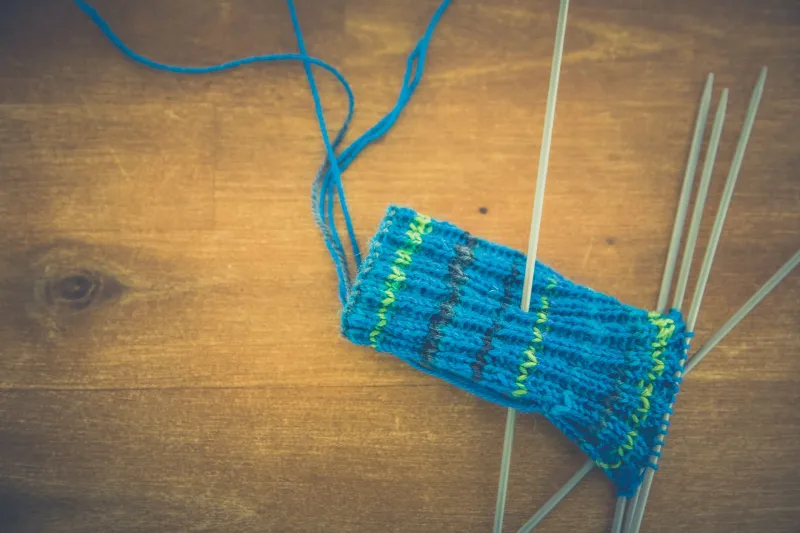
The key word there is loose. Slow hobbies — the kind that occupy your hands without demanding your full analytical attention — are basically a backdoor into that state. Knitting a row. Filling a journal page. Wandering through your neighborhood without earbuds in. These activities create just enough gentle focus to keep anxiety at bay, while leaving the creative parts of your brain free to roam.
I started keeping a small notebook nearby when I paint now, because ideas genuinely show up out of nowhere. It's like my brain finally has room to breathe and it goes, oh, here's that thing you've been trying to figure out.
The Hobbies That Changed Things For Me
I didn't come to slow hobbies gracefully. My first instinct with watercolor was to watch seventeen YouTube tutorials before touching the paper. My first journal sat unopened for three weeks because I kept waiting to feel "ready" to write in it. Long walks felt indulgent when I had a list of things to do.
But one by one, I let myself actually do them without optimizing them to death, and the difference was enormous.
Watercolor painting was the big one. There's something about working with a medium you genuinely cannot control — watercolor does what it wants, and fighting it makes everything worse — that teaches you to let go in a way that's almost meditative. You learn to observe. To notice color and light. And when you're really in it, time does that melty thing where an hour feels like ten minutes.
Journaling sneaked up on me differently. I started doing it mostly as a brain dump — just getting the noise out of my head and onto the page — and somewhere in that process I started noticing patterns in my own thinking that I'd never seen before. Journaling isn't just reflective; it's diagnostic. It shows you what you actually care about, as opposed to what you think you're supposed to care about.
Long, unscheduled walks feel almost countercultural at this point. No destination, no podcast, no audiobook. Just moving through space and letting your eyes land on things. I've had more creative breakthroughs mid-walk than in any planned brainstorming session. Something about physical movement combined with visual input that isn't a screen just cracks your thinking open.
Building a Life That Resists the Rush
Here's the thing nobody tells you: slow hobbies require active protection. The world will absolutely fill every quiet moment if you let it. So you kind of have to be a little intentional — not in a hustle-culture, optimize-your-downtime way, but in a gentle, this-matters-to-me way.
A few things that have actually worked for me:
Set a no-phone window. Even just one hour in the morning or evening where the phone stays in another room. Use that time however feels right — sketch, write, sit on the porch, do absolutely nothing. The point is the absence of input.
Keep your materials visible. If the watercolors are buried in a closet, you'll never use them. If the journal is on your nightstand, you will. Friction is the enemy of slow hobbies. Make it stupid easy to just pick something up.
Resist the urge to document everything. This one's hard in the age of Instagram, but try keeping some creative moments just for yourself. Not every painting needs to be shared. Not every walk needs a photo dump. Some experiences get richer when they stay private.
Let yourself be bad at things. This is maybe the most important one. Slow hobbies aren't about mastery. They're about presence. The goal of watercolor isn't gallery-worthy paintings; it's the two hours you spent not thinking about your inbox.
The Turtle Principle
Okay, I can't write a post like this without going a little on-brand here. There's a reason I've always loved turtles — they move at exactly the pace they need to move at. They're not slow because they're lazy or broken; they're slow because that's how they thrive. They carry everything they need with them and they're genuinely unbothered by the pace of everything else around them.
That energy is what I'm chasing with slow hobbies. Not productivity. Not optimization. Just the quiet confidence of moving at your own pace and trusting that it's enough.
In a world that's constantly telling you to do more, move faster, fill every gap — choosing to go slow is genuinely radical. And weirdly, paradoxically, it's also how you end up doing your most interesting, most authentic creative work.
So grab the watercolors. Open the journal. Take the long way home. Your brain will thank you for it.