The Little Book That Taught Me to Actually Look at My Life
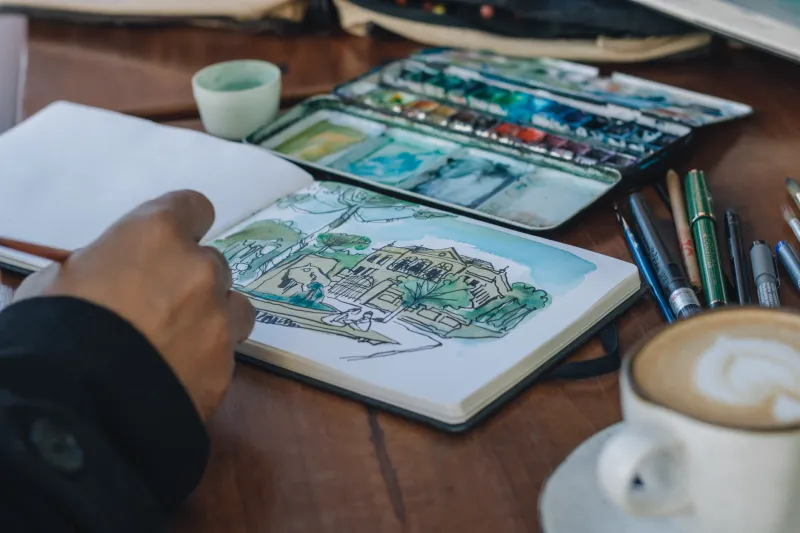
I used to walk through my neighborhood the same way I scrolled through my phone — fast, distracted, barely registering what was right in front of me. Then one afternoon I threw a tiny sketchbook into my bag on a whim, and honestly? Everything kind of shifted after that.
I'm not exaggerating when I say a pocket-sized notebook changed how I experience daily life. Not because I suddenly became some brilliant artist. But because the act of drawing something — anything — forced me to actually stop and look at it. Really look. Like, how does that old fire escape on the corner building connect to the brick? What does the light do to my coffee cup at 7 a.m.? Why does the woman across the diner have such an interesting way of holding her fork?
This habit is one of the quietest, most rewarding things I've ever picked up. And if you've ever felt like your creativity is a little dusty, or like the days are blurring together, I genuinely think a sketchbook you carry everywhere might be the thing you didn't know you needed.
You Do Not Have to Be Good at Drawing. I Mean It.
Let's get this out of the way right now, because it's the thing that stops most people before they even start. This is not about producing art you'd hang on a wall or post on Instagram for likes. A pocket sketchbook is a private, low-stakes tool for training your eye — full stop.
The whole point is the looking, not the finished result. Wobbly lines are fine. Proportions that are totally off are fine. A scribble that vaguely resembles a tree but could also be a broccoli floret? Completely fine. Nobody's grading this. The sketchbook is for you, and the only rule is that you use it.
Once I let go of the idea that my sketches had to look like anything in particular, the whole practice opened up. I started drawing the weirdest, most mundane stuff — the pattern on a paper bag, the silhouette of my dog sleeping, the way a crack runs across the sidewalk outside my apartment. Small stuff. But drawing those things made me see them in a way I never had before.
What to Actually Carry (Without Weighing Down Your Bag)
The gear question is real, because if your setup is annoying to carry, you won't carry it. Simple as that. Here's what actually works for everyday life:
The sketchbook itself: Look for something in the 3.5" x 5.5" range — a classic Field Notes size or a Leuchtturm1917 pocket notebook works great. Moleskine makes a small watercolor version if you want to get fancy later, but honestly, any dot-grid or blank pocket notebook from your local Target or craft store will do the job.
A single pen: You don't need a whole pencil case. One fine-tip pen — a Micron 05 or even a basic Staedtler — is enough to get started. Ballpoint pens work too. Seriously, whatever's already rattling around at the bottom of your bag is fair game.
Optional add-on: A set of three or four watercolor brush pens (Tombow makes great ones) can slide into a side pocket and add color without any mess. But this is firmly a "later if you want it" situation, not a requirement.
That's it. Two items. The whole setup fits in a jeans pocket or a small crossbody bag with room to spare.
Building the Habit Without Burning Out
The trap with any new creative habit is going too hard too fast and then crashing out when life gets busy. Here's how to make this one actually stick:
Attach it to something you already do. Waiting for your coffee to brew? Sketch the mug. Sitting in the doctor's waiting room? Draw whoever's sitting across from you (discreetly, obviously). Riding the subway or sitting in a drive-through line? Perfect sketchbook time. You're not carving out extra hours — you're filling the small gaps that already exist.
Set a tiny goal, not a big one. One sketch a day sounds manageable until you miss three days and feel guilty. Instead, just aim for something in the sketchbook each week. No minimum size, no minimum quality. A two-minute scribble counts. The goal is to keep the habit alive, not to be impressive.
Date every page. This one sounds small but it matters more than you'd think. When you flip back through your sketchbook months later and see the date next to a drawing of your friend's kitchen table or a weird cloud you spotted on a road trip, it becomes something closer to a visual diary. The memory attached to even a rough sketch is surprisingly vivid.
The Weird Ways It Bleeds Into Everything Else
Here's the part I didn't expect when I started: the sketchbook habit doesn't stay in the sketchbook.
After a few months of actively trying to notice things worth drawing, I started noticing things I wasn't even planning to sketch. The way afternoon light hits the wall of my living room. The specific shade of rust on an old mailbox. The expressions people make when they're thinking hard about something. My brain just started cataloguing the world differently — more visually, more slowly, more intentionally.
It also did something unexpected for my mood. There's something grounding about sitting with a small drawing for five or ten minutes. It's not meditation exactly, but it's in the same neighborhood. You're not thinking about your to-do list or your inbox. You're just looking at a thing and trying to put it on paper. That kind of presence is genuinely hard to find, and a sketchbook is one of the cheapest ways I know to get there.
And creatively? Every other thing I make — whether it's a mood board, a collage, even the way I think about color when I'm decorating a space — feels richer now. Like I've been slowly building a visual library inside my own head without even trying.
Start Tomorrow. Seriously, Tomorrow.
You don't need to prep for this. You don't need a special sketchbook or a YouTube tutorial or the perfect pen. Grab whatever small notebook you have lying around, toss a pen in your bag, and the next time you're waiting for something — your food, your friend, your coffee — open it up and draw what's in front of you.
It will be awkward at first. The drawings will look nothing like what you're seeing. That's normal and it's also kind of the point. You're not training your hand right now — you're training your eyes. And that part? That part starts working almost immediately.
Turtles know a thing or two about slowing down and paying attention to where you are. This little sketchbook habit is basically that philosophy in notebook form. Give it a few weeks and I promise you'll start wondering how you ever moved through the world without it.