Stop, Look, and Actually Feel Something: A Beginner's Guide to Really Seeing Art
Stop, Look, and Actually Feel Something: A Beginner's Guide to Really Seeing Art
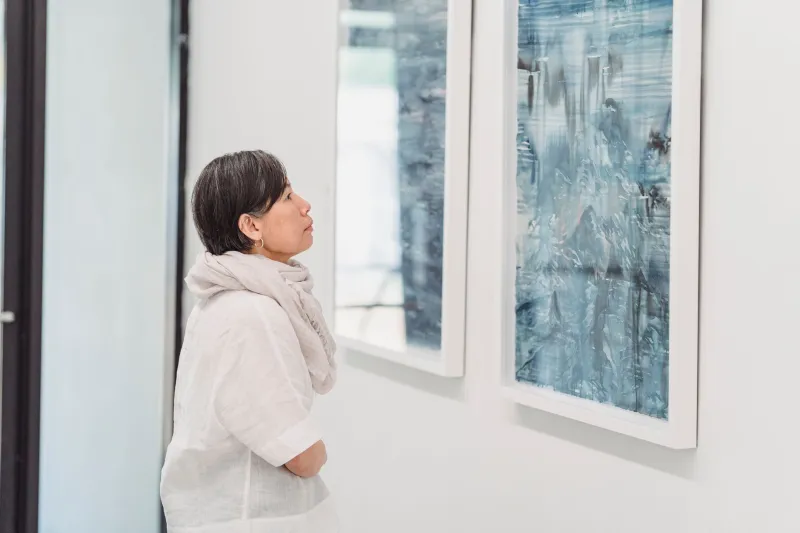
I used to be the worst museum visitor. I'd walk in with the best intentions — totally ready to be moved by art, you know? — and then I'd spend three hours shuffling past hundreds of paintings, reading the little placard next to each one, nodding like I understood, and leaving feeling... nothing. Vaguely cultured, maybe. But mostly just tired and hungry.
It wasn't until I stumbled onto a method that forced me to slow down that everything changed. And I mean everything. A painting I would have walked past in ten seconds suddenly had me standing there for twenty minutes, genuinely feeling things. Wild, right?
Here's what I've figured out — and trust me, none of this requires an art degree or a single drop of pretension.
The 30-Second Problem Nobody Talks About
Studies have actually clocked how long people spend looking at art in museums, and the number is kind of embarrassing: somewhere around 27 to 30 seconds per piece. Less than half a minute. That's barely enough time to register what you're even looking at, let alone feel anything about it.
And honestly? I get it. Museums are overwhelming. There's a lot of ground to cover, your feet hurt, and somewhere in the back of your mind you're thinking about whether you validated your parking. Art appreciation sounds like something that should come naturally, so when it doesn't, it feels like a personal failure instead of just a pacing problem.
But here's the thing — it is a pacing problem. Art isn't meant to be consumed like a social media scroll. It's meant to be sat with. The good news is that sitting with it is a skill, and skills can be learned.
Start With Just One Piece (Seriously, Just One)
Forget trying to see the whole gallery. Pick one painting — or one print, one illustration, one piece you bookmarked online — and commit to spending at least five full minutes with it. Set a timer if you have to. Five minutes feels like forever at first, I promise, but stay with me.
Don't read the title or the artist's name yet. Don't look anything up. Just look.
Start with your first impression. What's the very first thing your eye goes to? Don't question it — just notice it. That instinct is telling you something. Maybe it's a splash of red in the corner. Maybe it's a face that doesn't quite look right. Maybe it's the light hitting something in a way that feels almost real. Whatever it is, that's your entry point into the piece.
Play the "What Do I Notice?" Game
Once you've had your first impression, start getting curious. This is the part where you go full detective mode, and honestly, it's kind of fun once you get into it.
Ask yourself some low-stakes questions:
- What's actually in this picture? Describe it out loud or in your head like you're explaining it to someone who can't see it.
- Where is the light coming from? Is it warm or cool? Does it feel like morning or late afternoon?
- What's happening at the edges? Artists make deliberate choices about what gets cut off and what stays in frame.
- Is anything moving — or about to move? Some paintings have this incredible frozen-moment energy where you can almost feel the tension.
- How does the color make you feel? Not what the color is, but how it hits you emotionally.
You don't need to answer these like you're writing an essay. Just let them open up the image a little more. Every question is basically a door, and behind each door is more painting to explore.
Let It Be Weird or Boring or Confusing
Here's something nobody tells beginners: you're allowed to not like a piece of art. You're also allowed to find it confusing, unsettling, or just kind of blah. That reaction is valid information.
Some of the most interesting conversations I've had with myself in front of a painting started with why does this make me uncomfortable? or why am I not connecting with this at all? Chasing that question leads you somewhere real.
Art doesn't owe you an immediate emotional payoff, and you don't owe it instant admiration. Think of it less like a transaction and more like meeting someone at a party. Some people click right away. Others take a few conversations before you see what makes them interesting. And some just aren't your people — and that's fine too.
Look It Up After You've Formed Your Own Opinion
Okay, so once you've really spent time with a piece and formed some thoughts, then go read about it. Look up the artist. Find out when it was made and what was going on in the world at that time. See if your instincts lined up with the intention — or if you picked up on something totally different.
This is genuinely one of my favorite parts of the whole process, because sometimes you'll discover that the thing you noticed was completely intentional and packed with meaning, and sometimes you'll find out the artist meant something totally different from what you felt — and both of those outcomes are fascinating.
Knowing the context doesn't replace your personal reaction. It just adds another layer to it.
You Can Do This From Your Couch, Too
Museums are great, but they're not the only place this works. Google Arts & Culture has high-res images of thousands of paintings where you can zoom in close enough to see individual brushstrokes. The Metropolitan Museum of Art has a free online collection. Even just pulling up an artist you're curious about and sitting with one image for five minutes counts.
I've had genuinely moving moments staring at a painting on my laptop at midnight in my pajamas. Art doesn't care about the setting. It just needs your attention.
The Turtle Approach to Art (Slow Wins Every Time)
If you've hung around TurtleGirl76 for any length of time, you probably already know I'm a big believer in slowing down — whether that's with a good book, a TV show that needs a few episodes to find its footing, or a creative project that refuses to be rushed. Art appreciation fits right into that same philosophy.
The slow look is the good look. It's the one that sticks with you, that shows up later when you're doing dishes and suddenly you understand something about that painting you couldn't articulate before. It's the one that makes you feel like art is actually for you, not just for people who went to school for it.
You don't need to know anything to start. You just need to stop walking.
Pick one piece this week. Set a timer. See what happens.