Ditch the Algorithm: Your Personal Roadmap to Finding Music You'll Actually Obsess Over
The Algorithm Is Not Your Friend (Okay, It's Not Your Only Friend)
Let me be real with you for a second. I have spent entire Sunday afternoons just letting autoplay do its thing, nodding along to whatever Spotify decided I was in the mood for. And honestly? It's not terrible. The algorithm knows I like moody indie folk and anything with a cello in it, and it delivers. But somewhere along the way I realized I'd stopped being surprised. Every new artist felt like a slightly blander version of something I already loved. The edges had been sanded off my entire listening life.
That's the thing about algorithmic discovery — it's optimized for comfort, not adventure. It's built to keep you listening, not to challenge you or send you somewhere genuinely unexpected. And if you're anything like me, someone who treats music like a living, breathing part of your creative world, that comfort can quietly turn into a ceiling.
So I started doing something radical: looking for music myself. On purpose. With intention. And it changed everything.
Start With the Rabbit Hole Method
Here's one of my favorite ways to find new music without a single algorithm involved: pick one artist you love and go full detective mode. Not just "check their related artists" on Spotify — I mean actually dig.
Look up interviews. Find out who they cite as influences. Read the liner notes if you can track them down. Check which labels they've been on and explore the rest of that roster. Follow the thread wherever it goes. One afternoon I started with a band I'd loved for years and ended up discovering a whole scene of early 2000s post-punk revival acts I'd completely missed the first time around. Hours gone. Zero regrets.
This kind of intentional listening is genuinely its own creative act. You're building a map, making connections, developing taste in real time. It's not passive. It's more like research for a project you care about — which, if you're serious about music, is exactly what it is.
Crate Digging Doesn't Have to Mean a Dusty Record Store (But That Helps)
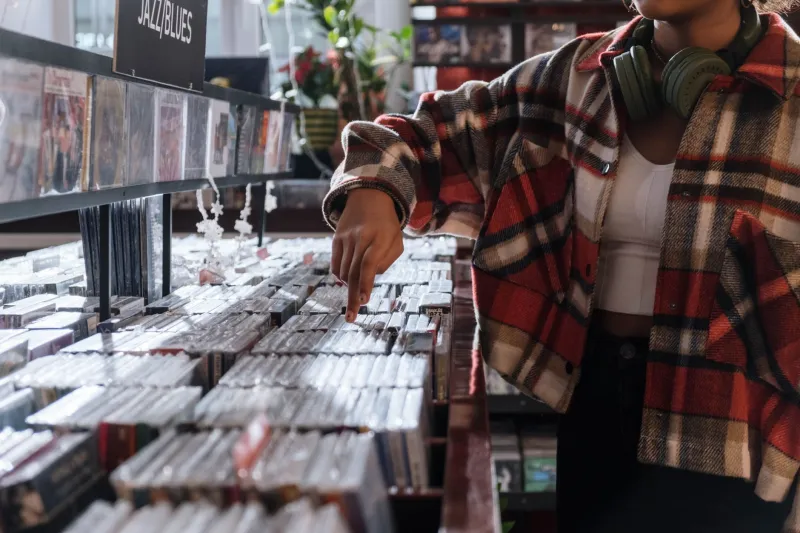
If you have a record store anywhere near you, please go. Even if you don't have a turntable. Even if you're just browsing. There is something about physically flipping through albums — reading the back covers, looking at the artwork, picking something up because the name is weird or the font is cool — that creates a totally different relationship to discovery.
I've found some of my most-played records purely because the cover art caught my eye in a used bin. That's not an algorithm. That's serendipity, and it's wonderful.
But if you're nowhere near a shop, the digital version of crate digging is absolutely a thing. Bandcamp is probably the closest online equivalent — it's full of independent artists, you can browse by genre and location, and you're supporting musicians directly when you buy. Spend an hour on there with no particular destination in mind and I promise you'll find something worth keeping.
Music Blogs Still Exist and They're Still Great
Remember music blogs? They didn't disappear — they just got quieter. Sites like Stereogum, The Needle Drop (okay, that's YouTube, but still), Pitchfork for all its flaws, and a dozen smaller genre-specific blogs are still out there writing about music with actual opinions and context. Reading a review written by a human being who genuinely loves or hates something is a completely different experience than seeing a song show up in your Daily Mix.
Find a writer whose taste overlaps with yours about 70% of the time — that 30% gap is where the interesting stuff lives. Follow them. Read their year-end lists. Argue with their takes in your head. That friction is useful. It makes you think about why you like what you like, which makes you a more intentional listener overall.
Let Real People Recommend Things to You
This one sounds obvious but we've kind of forgotten how to do it. Ask someone. Ask your coworker who always has headphones in what they've been listening to lately. Post in a Reddit community for a genre you're curious about. Check what your friends are playing on Last.fm if they still use it (some of us do).
Human recommendations carry context that algorithms can't replicate. When a friend says "I've been obsessed with this record since my road trip to New Mexico," that story becomes part of how you hear the music. It adds something. The algorithm just says "because you liked X." That's not a story. That's a transaction.
I've also had great luck with music-forward communities on Discord and even some corners of TikTok where people are genuinely just sharing deep cuts and weird finds. The key is looking for spaces where people are excited about music, not just using it as background content.
Build a Discovery Practice, Not Just a Playlist
Here's the mindset shift that made the biggest difference for me: treating music discovery like a practice rather than a task. You don't have to find five new artists every week. You don't need a system or a spreadsheet (though honestly, a little spreadsheet doesn't hurt).
What you do need is curiosity and patience — the same things you'd bring to any creative pursuit you actually care about. Give an unfamiliar album three full listens before you decide how you feel about it. Sit with something that doesn't immediately click. Let it reveal itself on its own timeline.
Some of my favorite records now are ones I almost skipped after the first ten minutes. Slow burns exist in music just like they do in TV and books, and the payoff is just as real.
The Playlist Is the Beginning, Not the End
Once you've been digging for a while — reading, listening, asking around, getting lost in Bandcamp rabbit holes — you'll start to notice your taste getting sharper and weirder and more specifically yours. That's the whole point. Not to have better music than anyone else, but to have music that actually means something to you because you went out and found it yourself.
The algorithm will always be there when you want something easy. But the stuff you discover on your own? That hits different. Every single time.
Now go find something new. I'll be over here flipping through used records and absolutely not apologizing for it.